Municipalities across Saskatchewan set to receive record revenue-sharing
March 30, 2026, 9:57 am
Nicole Taylor Local Journalism Initiative Reporter

In 2026-27, the Government of Saskatchewan will distribute more than $392 million to municipalities in Municipal Revenue Sharing—more than ever before.
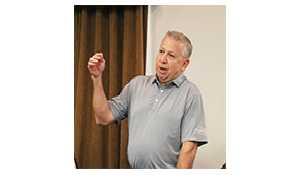
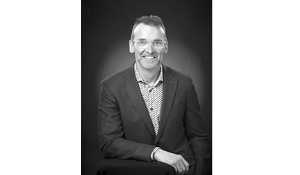
“That’s something that started under this government, and that’s something that no other province does,” said MLA for Moosomin-Montmartre, Kevin Weedmark.
“We dedicate funding to municipalities each and every year. We take part of the provincial gas tax, the same percentage every year. As time goes on and gas prices go up, that increases as the province grows, and we take that piece and share it with municipalities.”
The funding is distributed based on population and continues to grow over time. Census data plays a key role in determining how much each community receives. When calculating the 2026-27 Municipal Revenue Sharing (MRS) grants, the 2021 Census figures were used, including revisions. Census figures will be updated once data from the 2026 Census becomes available.
“Every town, every village, every hamlet, every rural municipality and every city receives their share based on population, and that tends to rise over time,” said Weedmark. “As your community grows, you get more funding, and as time goes on, everyone’s getting more funding. The pot grows, and more funding is available.”
The funding comes with no restrictions on how municipalities choose to spend it.
“It’s no-strings-attached funding,” said Weedmark. “They can spend that on their fire service. They can spend that on infrastructure. They can meet their own priorities with that funding.”
In this year’s provincial budget, municipalities will receive $392.4 million through revenue sharing, an increase of $30.7 million from last year.
“This is more than has ever been provided through municipal revenue sharing in Saskatchewan,” said Weedmark. “It’s about an 8.5 per cent increase from last year, and it’s record-high funding.
“That stable baseline funding is something communities can count on,” said Weedmark. “It lets them invest in their priorities, improve infrastructure, plan for the future and build more sustainable communities.”
Communities in the constituency will see increases in their allocations this year. “The Town of Indian Head will receive $613,000 this year. That’s up from $562,000 last year,” said Weedmark.
“The Town of Moosomin will receive almost $893,000 this year, getting close to $900,000. That’s up from $819,000 last year.”
Weedmark said Saskatchewan’s approach differs from other provinces by leaving decision-making at the local level. “Communities and local government are a very important part of our system,” said Weedmark. “They’ve got their own funding sources, including property tax and user fees, but we want to help them with funding from the provincial level. We don’t want to make them come to us and apply for grants for ongoing operations,” he said. “We want local councils to decide what their priorities are. We provide the funding, no strings attached, and they decide how to use it.
“It has increased steadily since 2007,” said Weedmark. “It adds up to about $5 billion in unconditional grants moved to municipalities from the provincial level in that time. That’s been going up more or less steadily that entire time.”
Weedmark said representatives from other provinces have taken notice.
“I’ve often been told by people from other provinces, ‘Wow, I wish we had something like this,’” he said. “It’s a fair way to do things. It takes control away from the provincial government and leaves it at the local level, and that’s where it should be.
“What’s amazing about this budget is what we were able to do in the face of global headwinds,” said Weedmark. “We could have cut services. We chose not to do that. We could have raised taxes. We chose not to do that.
“We’ve delivered a budget that protects Saskatchewan, provides record funding for municipalities and provides record funding for healthcare,” he said.
“In Moosomin, there is $768,000 being spent annually to support local physicians,” he said. “A couple of years ago, we implemented the southeast family medicine residency program so doctors can complete their two years of residency in Moosomin. We’ve also added 6.2 positions for medical professionals to support local doctors,” he said.
“We now have 19 primary health-care providers in Moosomin—14 physicians, four medical residents and one nurse practitioner. When I first came to Moosomin, there were two—Dr. Davidson and Dr. Hussein,” said Weedmark. “It was a struggle to grow that. Our government takes a different approach. Our government believes in communities.
“This year is an 8.5 per cent increase in revenue sharing, and inflation is running at about two per cent, so this is running ahead of inflation.
“The Town of Moosomin is doing an amazing job,” said Weedmark. “I’m a taxpayer in the town, and my taxes went down last year. Between having this funding available and having growth in the community, they’re able to keep taxes down,” he said. “The town’s doing a great job managing that.
“Between 80 and 90 housing units have been added over the last couple of years,” said Weedmark. “That’s significant growth, and it comes with challenges. It’s very helpful to have not only a stable source of funding, but a growing source of funding in revenue sharing to meet those challenges.
“The revenue-sharing program is a positive for this province,” said Weedmark. “It’s good to see that support flowing to local communities so they can use it on whatever their priorities are.”
The Town of Moosomin is preparing to use this year’s municipal revenue-sharing increase to continue infrastructure work and support future growth.
Mayor Murray Gray said the funding helps with budgeting and planning.
“It helps with budgeting, and it gives us more incentive to grow,” Gray said. “As we add population, we get more revenue sharing.”
While the town has not finalized new spending decisions, Gray said much of the funding will go toward projects already underway.
“We’ve got infrastructure work that needs to be done, and we didn’t finish all of last year’s projects,” he said. “We’ll be working on some of those.”
One of the major carryover projects is a water line on the north side of the highway, which will improve service to businesses in that area.
“That will loop our system and get more pressure for the businesses out there.”
Gray said project priorities are determined through collaboration between council and town staff.
“They know the system, so they advise us, and we all work together to figure out what needs to be done first,” he said. “Money and time are the only two things we’re short of.”
He said participation in the upcoming census will affect future funding.
“That census is what the next four years of revenue sharing will be based on,” Gray said. “It’s extremely important that everybody gets counted.”
Revenue sharing funding in Carlyle will support a range of municipal projects rather than being directed toward a single initiative.
Carlyle mayor Jennifer Sedor said the funding will go toward the town’s overall budget while helping maintain services. “The revenue sharing funding for Carlyle will not be directed at a single project, but will support this year’s annual budget and assist in keeping municipal taxation steady,” Sedor said.
“Our major projects for 2026 include sewer relining, lagoon maintenance, road repair, and a refresh to the main floor of our community hall. We are always excited to see an increase in our portion of the funding, however rising costs seem to quickly catch up, reducing the overall value of the funds.

-SM.jpg)






 sm.jpg)