Moosomin passes budget with no change to mill rate, minimum tax increase
Minimum tax will go from $750 to $1,000 a year, an increase of $250 or 68 cents a day
June 1, 2026, 8:45 am
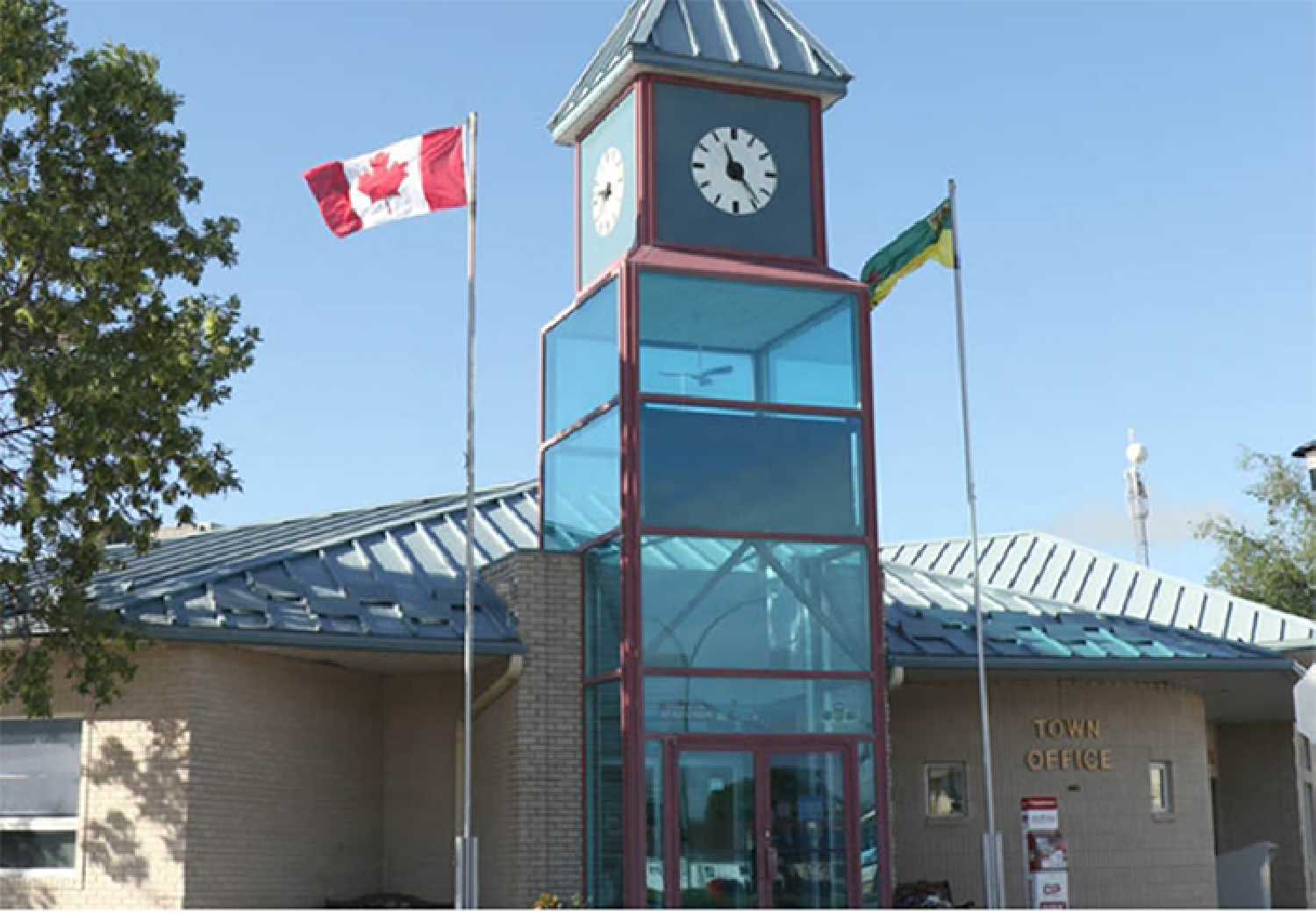

Moosomin town council passed the 2026 budget on Wednesday with no change to the mill rate, but an increase to the minimum tax from $750 a year to $1,000 a year—an increase of $250 a year, or just over 68 cents a day. The increase means that more properties are paying the minimum tax. When the minimum tax was $750 it affected 215 properties. With the increase to $1,000, it will affect 357 properties.
There is no change to the mill rate in 2026. The mill rate will remain at 13.5 mills. Mill rate factors will remain at 0.6 for agricultural land, 0.785 for residential land, and at 1.8 for commercial land.
The town will collect $3,754,632 in taxation in 2026, a slight increase from 2025, when the town collected $3,666,197 which was a significant decrease from 2024 when the town took in $4,136,788.
Total revenue in 2026 is $9,963,861, and total expenditures are $9,934,810, for a budgeted surplus of $29,051.
Mayor Murray Gray says the goal going into this budget was not to increase taxes for the majority of the population. He says by increasing the minimum tax, it also helped narrow the gap between the properties that are paying the most tax and properties that are paying the least.
“The minimum tax has not been increased since 2019, so the gap between the top and the bottom just continues to grow,” he says. “It’s just in order to keep it as fair as we can. It had been a long time since we touched it. Every time that there is an assessment, then more properties come out of the minimum tax. We’re basically bringing more back into it.”
“We also wanted to build our budget without changing the mill rate, and that was a way to create fair taxation across the board, and to have a little bit of an increase in tax revenue in order to do that.
“I think probably the biggest impact is because we do have a lot of infrastructure that needs done, and a lot of other work. This is allowing us to do that work and not to increase tax for everybody else.
“Between an increase in assessment, an increase in municipal revenue sharing, and the minimum tax coming up, we’re able to build a budget without increasing tax to the rest of the residents, so I think that’s the value to everybody else. We all campaigned on fiscal responsibility, and we’re trying to live within our means, and work within our taxation. Something like a half a mill increase would affect everybody in town, but this minimum tax only affected a small percentage of homeowners.
“We all have to bear the brunt of the of the cost to run a community and the higher taxed properties just kept going up and up, and there was a big gap. There are other communities in the area that have just a flat tax where everybody pays the same. That’s different taxation than what we do. Our taxation is based on ability to pay. At $750 for the services received, we all thought that was a lot of value for $750 that those homeowners were getting, and were comfortable with the increase to $1,000. We didn’t want to raise it too much, we wanted to be as fair as we could, and the number of $1,000 even is what we settled on.
“Since 2015 when it was first introduced, it went from $250 to $400 to $600 to $750 so there have been steps all the way up, and that has been the intention.
“We have some homes that pay $10,000 in tax, so that gap just continues to get bigger, and if you don’t bring the minimum tax up, it just keeps getting bigger and bigger.
“We also want to encourage people to improve their properties and to build nice houses.”
What was the town’s goal as they worked on the budget this year?
“Hold taxes for the majority of the property owners, and look more on the expense side in order see to how we can operate as efficiently as we can and work within our means,” says Gray. “We want to promote the community as business friendly, as a community that you want to come and set up shop in, and I think you’re not sending the right message if every year you put your taxes up and you make it unaffordable to do business in your community. So we wanted to build the budget within that. We know we have lots of paving to do, and we know we have pipe to put in the ground, and all those things, but in general, looking at it, we wanted to build a budget that could do as much of that as we can without having to go back to the taxpayers and say we need another mill on the tax.”
What were some of the challenges of putting the budget together?
“Projects lingering, I think, is the hardest part about building a budget right now,” says Gray. “Carrying over projects from year to year that you don’t get done or you’re forced into doing—for instance, the dump. The dump needs to be a transfer station. We’re not burying garbage now, which was expensive, so we’re trying to build a budget that works within that. That and the water line north of the highway that we need to do, those projects that you build in the budget, or you determine you need to do that don’t get done in the year that you planned to, makes it difficult to build a budget.
“We have quite a bit of paving. We have $450,000 in paving, $160,000 in patching, and we’re doing some of the stuff that we know needs to get done. Obviously you want the streets to be passable, those are the things that residents notice. So those were the some of the challenges that we faced. But we worked pretty hard in order to make sure that the budget worked within the revenue that we had with the same mill rate.”
Gray says he wants to see some infrastructure projects completed this year.
“I do want to see that transfer station set up. Right now it’s not conducive to easily unload your garbage at the dump. We need to design something so our residents are easily able to take their garbage to the bins there. So that’s a big project that I look forward to being done this year. Our town crew has also done a really good job of helping us plan where the biggest necessity is to replace the water lines, they know where the breaks are, they know where the issues are, so they’re helping us with a longer five-year plan on where we need to go next year, and the year after, and the year after, so I think that’s important too. The water’s got to come out of the tap when you turn it on, nothing else really matters if you don’t have your services.”
What was the hardest part of putting the budget together this year?
“We have quite a bit of money that we spent the last three or four years, between the airport payment, the water treatment plant payment, the money for the visual arts centre—so we’ve spent some money before we even start sitting down on the budget. And those were important projects, and they’re all projects that moved our community forward, but that comes right out of the taxation before you even start to do any other projects,” he says. “And no regrets, I’m happy that we did each and every one of those projects, but it does start you with less money to spend right out of the gate.
“I just want to thank council for the work that everybody put in, in order to build this budget, in order to build a budget in a way that I think can make us as successful as we can for the year, and provide as many services as we can without taxing our taxpayers.
“I think everybody went in with the right frame of mind and I think it was great that we worked together to build it.
“Every time that I do the process, it gets a little easier because you understand things a little bit more, but I think everybody had the right frame of mind going in on this. We didn’t have anybody who wanted to increase the mill rate by two points and spend a whole bunch of money that we didn’t have, because we don’t have a big source of revenue—it’s your taxpayers where the money’s coming from. So we were all conscious of that. We didn’t want to tax them more than we already do. Everybody kind of had the same vision going in, which is good.”
Budget breakdown
Following is a breakdown of some of the key aspects of the budget:
Previous mill rates
• In 2015 the mill rate was increased from 12.5 mills to 14.5 mills (which was a 16% increase), and began applying a $250.00 Minimum Tax on Residential Improvements
• In 2016 the mill rate increased to 15.5 mills, and the Minimum Tax on Residential Improvements increased from $250.00 to $400.00.
• In 2017 due to assessment revaluation, the mill rate was reduced from 15.5 mills to 11.5 mills, and the Minimum Tax on Residential Improvements was increased from $400.00 to $500.00.
• In 2018 the Mill Rate of 11.5 stayed same, and Minimum Tax on Residential Improvements remained at $500.00
• In 2019 the Mill Rate increased from 11.5 mills to 12.5 mills, and Minimum Tax on Residential Improvements increased to $750.00
• In 2020 the Mill Rate was reduced from 12.5 mills to 12.0 mills due to downturn in economy due to COVID-19
• In 2021 due to assessment revaluation the mill rate was reduced from 12.0 mills to 11.5 mills, and Minimum Tax on Residential Improvements remained at $750.00
• In 2022 the Mill Rate was increased from 11.5 mills to 12.5 mills
• In 2023 the Mill Rate remained at 12.5 mills
• In 2024 the Mill Rate increased from 12.5 mills to 13.5 mills
• In 2025 the Mill Rate remained at 13.5 mills
• In 2026 the Mill Rate remains at 13.5 mills
Tax discounts
Tax discounts for payment of current municipal taxes are offered as follows:
• 5% discount will remain for payment of current municipal taxes on or before September 30, 2026
• Per Provincial Government, the 5% discount offered for payment of property taxes does not apply to the school portion of taxes
• No further discounts after September 30, 2026
Provincial revenue sharing
Provincial Revenue Sharing will see an increase of $73,239 from $819,7510 in 2025 to $892,990 in 2026.
Airport project
The Town of Moosomin has partnered with the RM of Moosomin No. 121 and other municipalities on the new 5,300-foot paved airport runway in the RM of Moosomin. The Town has already made a $100,000 contribution in October 2019, then another $150,000 contribution in October 2023, and will make the five annual payments from 2024-2028 in amount of $135,990 each year, to bring the total contribution to $929,950.
Transportation and equipment
In the transportation expenses category, the Town will continue with the slurry seal/pavement crack filling program, and has budgeted $50,000 for slurry seal, and $25,000 for crack filling. The Town also plans on spending another $95,000 for sidewalk upgrades. The Town has also budgeted $160,000 for hot-mix asphalt spot repairs, as well as $460,000 for recapping at various locations.
In regards to equipment, the Town traded in the 2011 John Deere 31 0SJ Backhoe and the 2018 John Deere 700K Crawler Dozer, and purchased a 2026 Caterpillar 420XE Backhoe for $70,300 plus taxes. The Town also purchased a 2026 John Deere 72” rear discharge mower for $22,960 plus taxes, and a 2026 John Deere Commercial cut front mower with rear discharge deck for $44,600 plus taxes.
Protective services
Under the Protective Services category, the Town will be invoiced an estimated $278,500 for the RCMP, and $13,500 for Commissionaire’s to provide Bylaw Enforcement Services.
Waste management and recycling
In the Environmental category, the Town has chosen to use the “Community Led” program for recycling and as such, effective June 1, 2026, the Garbage/Recycling fee on the quarterly utility bills per residence will be reduced from $27 (garbage) + $30 (recycling) = $57 to only $27 (garbage). However, note that the July 31, 2026, utility bill will still have one month charge of recycling on the billing as this quarterly billing is for the period May 1, 2026, to July 31, 2026, then going forward, the entire $30 quarterly charge will be completely removed.
The removal of this recycling fee will reduce the overall utility billing by $120/annum.
Effective Dec. 1, 2025, garbage is now being placed in transfer station bins and hauled to the landfill at Whitewood. The Town also continues to work with Clifton Engineering to finalize design for a permanent landfill transfer with ramps to assist in placement of garbage in the transfer station bins. Clifton Engineering is also contracted to provide annual Groundwater Sampling and Reporting, for a cost of $47,800 plus taxes.
Economic Development
As of April 1, 2025, the Town of Rocanville and RM of Rocanville joined the Economic Development Committee, and this will now result in a cost sharing between all parties at: 25% Town of Moosomin, 25% RM of Moosomin, 25% CBA, 12.5% Town of Rocanville, and 12.5% RM of Rocanville.
Recreation
In the Recreation Department, the Town will be working on the following projects:
Bradley Park Upgrades for 2026 include:
a) Equipment shed at Bradley Park
b) Legacy Field Upgrades (Bantam Baseball with addition of two soccer fields. This is a community project)
c) New furnishings at West Point Dog Park (community project)
d) Complete paving project on main parking lot
e) Addition of night lighting on the outdoor pickle ball courts (community project)
Conexus Convention Centre Upgrades for 2026 include:
a) Re-do flooring at the Conexus Convention Centre
Other Upgrades for 2026:
a) Visitors/Tourist Booth by Town of Moosomin sign on Highway 1.
Utilities
In the utilities portion of the budget, the Public Works Department have the following major projects to complete:
a) Replace water main on Henry Street, just east of Windover Avenue.
b) Install new water main from North Cemetery along the North Service Road to Mazer’s Equipment
Other multi-year utility projects being worked on:
a) The $13.7 million Water Treatment Plant Upgrade project is almost fully completed and is expected to be finished on budget or slightly below. The Town took out a $3.5 million loan for this project, and this is the third year of 15 years of scheduled payments, with an annual payment of $371,278.81 due on October 15 of each year
b) The Town is budgeting for the work of removing sludge in the lagoon for an estimated cost of $250,000. The last time this was done was in 2020.
c) MPE Engineering to complete the project to review elevations and determine how to alleviate storm water drainage problems on the west side of Cook Road.











-SM.jpg)







 sm.jpg)