Sask one of the most attractive jurisdictions in the world for mining investment
September 8, 2025, 9:31 am
Kara Kinna
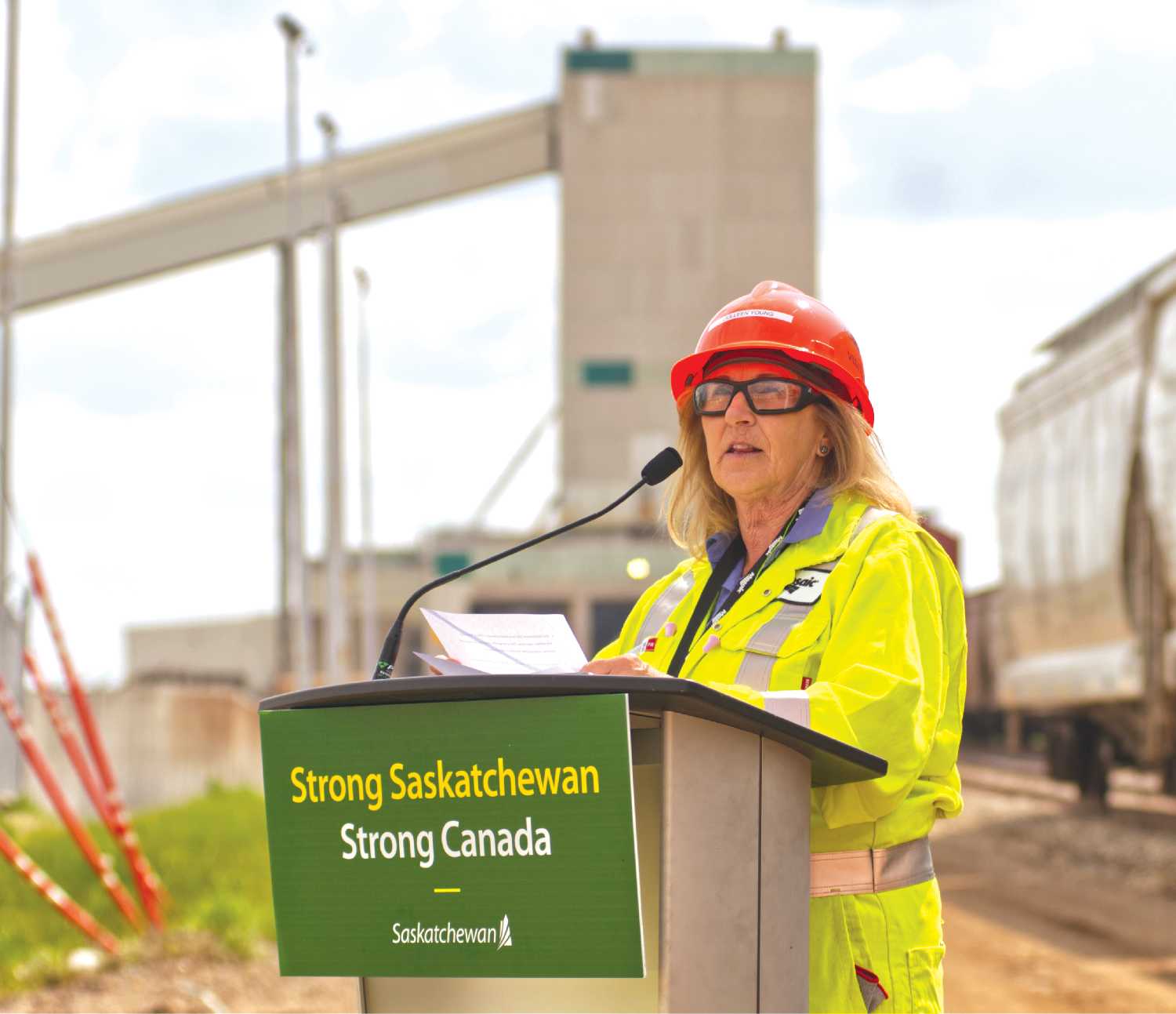

We spoke with Saskatchewan’s Minister of Energy and Resources Colleen Young about Saskatchewan’s position as one of the most attractive jurisdictions in the world for mining investment.
According to the Fraser Institute’s Annual Survey of Mining Companies, Saskatchewan is again the top region in Canada for mining investment attractiveness, ranking first in the country. The 2024 report included responses from 350 companies rating 82 jurisdictions around the world. In addition to its best-in-Canada ranking, Saskatchewan placed seventh globally, owing to its strong ranking in policy and regulatory perception.
The 2024 survey measured all regions on two main areas—policy perception and mineral potential—to come up with an overall attractiveness ranking for investment. Saskatchewan placed first in Canada, and third globally, in policy perception, based on responses concerning policy certainty, environmental regulation, the legal system and skilled labour supply.
Saskatchewan also ranked highly for its geological database—fourth in the world—which speaks to the Saskatchewan Geological Survey’s cutting-edge mapping technology and high-quality public geoscience data and its extensive library of core samples in its southern and northern Saskatchewan facilities.
Last year Saskatchewan reached record highs in potash production, mining approximately 24.7 million tonnes of potassium chloride, while also reaching new records for uranium production and sales—16,700 tonnes and $2.6 billion, respectively.
The province is home to 27 of the 34 minerals on Canada’s critical minerals list. In addition to uranium and potash, there is strong potential in Saskatchewan for further growth in the critical minerals sector: helium production continues to increase, while key projects in lithium, copper and zinc are set to begin production over the next year.
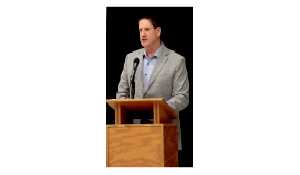
The interview with Minister Colleen Young follows:
What are some of the key factors that really sets Saskatchewan apart when it comes to mining investment attractiveness?
The Fraser Institute reported great news for our province overall and it does underscore Saskatchewan’s status as a leading global mining jurisdiction. As you know, this is the 11th straight year that Saskatchewan is ranked first in Canada for mining investment attractiveness and we are pleased to see that, and we are glad that Saskatchewan continues to be recognized as one of the best places in the world to invest in resource development.
Our mining investment is outstanding. We have 27 of 34 critical minerals in this province and it’s estimated to have been the highest of any province in Canada last year alone in 2024 in our mining investment area, and we’re expected to grow. We expect that we’re going to hit over $7 billion in 2025.
It’s our strong regulatory policy framework that continues to give investors and resource companies that confidence that we’re here, we’re listening to them, that we’re supportive, that we’re stable and a reliable place to make significant investments for mineral exploration mining projects.
How is Saskatchewan different from some other jurisdictions? What are we doing right?
Well I think we have created some really good competitive incentive programs and I think it’s the predictability and the stable regulatory environment that investors and companies look at and say ‘We’re not going to make a change the next year,’ that they can count on Saskatchewan’s regulation and the programs that we’re putting in place so that they are secure in making those investments and they know there’s not going to be a change, a rapid change in that, and I think that’s been for all of our industries whether it’s been the oil and gas, whether it’s been potash and now the new minerals that are coming online.
We make sure that we’re not making rapid changes in those regulatory frameworks on a yearly basis or any time and we make sure that we’re following the markets and that we know what’s out there and what these industries are looking to invest in.
How much does a report like this really matter? Does it actually make a real impact in terms of companies investing in mining in Saskatchewan?
Absolutely, we work very closely with the Saskatchewan Mining Association as well, the SMA. They are on the ground, they are working with businesses and industries and I work close with (SMA President) Pam Schwann in making sure that I am hearing what they’re saying and what they are looking for. And when we do that with our industries and we listen to them first-and-foremost, I think that they recognize that we’re here and that we’re stable and predictable, and that they can make a secure and confident investment in the mining industry in this province. And that’s been there for a long time, and as I said, I meet with many of them on a regular basis and assure them that if there is going to be any change, they’re given a heads-up, and that we are working with them to let them know when that change may be and if it works within their industry.
Is that something that you really think that’s helped make a difference for the province?
Absolutely, I believe so. The Fraser Institute does a really good job of listening to industries and making sure that they have provided their reports and provide that to the province, along with our credit ratings that are always there. Those industries are paying attention to those things.
How did it make you feel to see the ranking again this year?
We are very proud in Saskatchewan overall to know that we are leading in the global mining jurisdiction area and that we continue to lead there. The Fraser Institute has given us the 11th straight year that we have ranked first in Canada. It’s been year after year after year that we’ve had that ranking, and we are an energy superpower. We have many things to offer and when it comes to energy, we know in our markets to the south to begin with, but also on a global scale, there are many countries that are looking to Saskatchewan for those mining investments.
Are there any new developments coming down the pipeline right now that we should be particularly excited about?
We have seen significant investments in the mineral sector across a variety of commodities and we know that’s going to continue. Some of the notable ones I was just out at BHP—$19 billion Jansen conventional potash mine. Last week, did a tour of it, we visited out there and they’re targeted for their first production in 2027. And K+S Potash Canada is ramping up to nearly double production at the Bethune mine over the next couple of decades as well.
NexGen, they have a $2.2 billion dollar Rook One conventional uranium project in Northwestern Saskatchewan along Athabasca Basin. It has high grade ore deposits and it’s in its final stages of environmental licensing and approval.
Paladin Energy out of Australia completed the acquisition of Fission Uranium just recently this year and it’s a $1.2 billion conventional uranium project at the Patterson Lake south. Foran Mining Corporation at McIlvenna Bay, just up there by Hudson Bay, north of Hudson Bay, they have a copper and zinc development project which has currently been under construction for a while now, but they expect their first commercial production in 2026. So we are looking forward to that.
A brine lithium project is under development by Arizona Lithium, EMP metals, and Grounded Lithium. Benneton Mines just received an environmental approval for development of their uranium mine, and North American Helium is continuing construction of their purification facilities in Southwest Saskatchewan.
So we have a lot on the go right now and we’re really looking forward to many of these things getting into production.
Where do you see growth in the industry continuing?
We are the world’s largest potash producer and reached a record high of 24.7 Potassium Chloride tons last year and this year we are projecting the value of our potash sales to rise with recent increases in the international potash prices, so we are on pace with sales to end at the end of this year, $4.1 billion, and the potash industry continues to be a strong pillar of the province.
We know that there are a lot of things happening. I was just down at one of the mines here recently at Bethune and we see a bright future for the potash industry as it grows and they are making strong investments into our province as well. We are very proud of the potash industry and the work that they do.
They have global markets that they are sending to and are strong world-class mining companies that we have. So, the potash industry is very strong in the province. We are on track again to push past our 2030 growth plan of $9 billion in annual sales in the years ahead.
Are you anticipating a lot of growth in some of the other mining sectors as well?
In uranium production, our sales have already reached $2.6 billion last year and a lot of production happened there, but uranium sales for the current year are expected to increase further than they were last year with global markets that are looking for the high-grade uranium that we have. So they’re off to a strong start with sales of nearly $1.7 billion already in the first six months of this year.
Denison mines has one project coming on, NexGen is just waiting for their federal approvals, Cameco and Orano, which are world-class existing producers that have been increasing production as well in advancing projects in Saskatchewan.
We have a lot going on in the potash industry and it’s going to remain strong. I am very confident in the investments that are being made by the potash industry in our province.
What practical differences does this report make?
We are constantly ranked by the Fraser Institute as the top jurisdiction for mining investment and this shows that the industry sees Saskatchewan as the place to be, for investment, for knowing that it’s a stable, supportive and reliable jurisdiction to invest in the mineral development projects and we know that mineral development projects require significant investments. So these reports do affirm that the mining industry in Saskatchewan is a prime location for exploration and development.
What difference will it make for the provincial economy and for the province’s finances when you have these new mines coming online?
Mineral development and mining continue to be one of our most important economic drivers. They directly employ about 11,000 people and are one of the top contributors to our GDP and direct government revenue. As these mines come online and begin production, they’re going to be subject to mineral royalties and taxes, which do contribute to the provincial revenues and help fund public services, such as healthcare, education, social services, building of our highways, infrastructure such as schools, hospitals, and long-term care facilities, all of which benefit all of our Saskatchewan citizens.
So, it’s really critical to be supportive of these businesses and industries in our province, and work with them along the way as they build and invest in their projects in this province and contribute to our economic growth.
How different do you think this province would be without these mines and these resources?
We would be looking at a heavier tax burden and for us the mining sector, the potash, the oil and gas sector—all of the things that drive and provide a strong economy are critical to ensuring that we can make good investments that the people need and that they expect so that they can have a good quality life for themselves and their families as they grow.
Our population has grown in this province because of the investments that have been made by these companies, and by investors in our province. That provides good paying jobs for workers and for families in our province. It creates a strong economic base for us to be able to invest into our citizens.