APAS, Agriculture Union decry federal cuts to research sites
February 2, 2026, 9:42 am
Nicole Taylor, Local Journalism Initiative Reporter
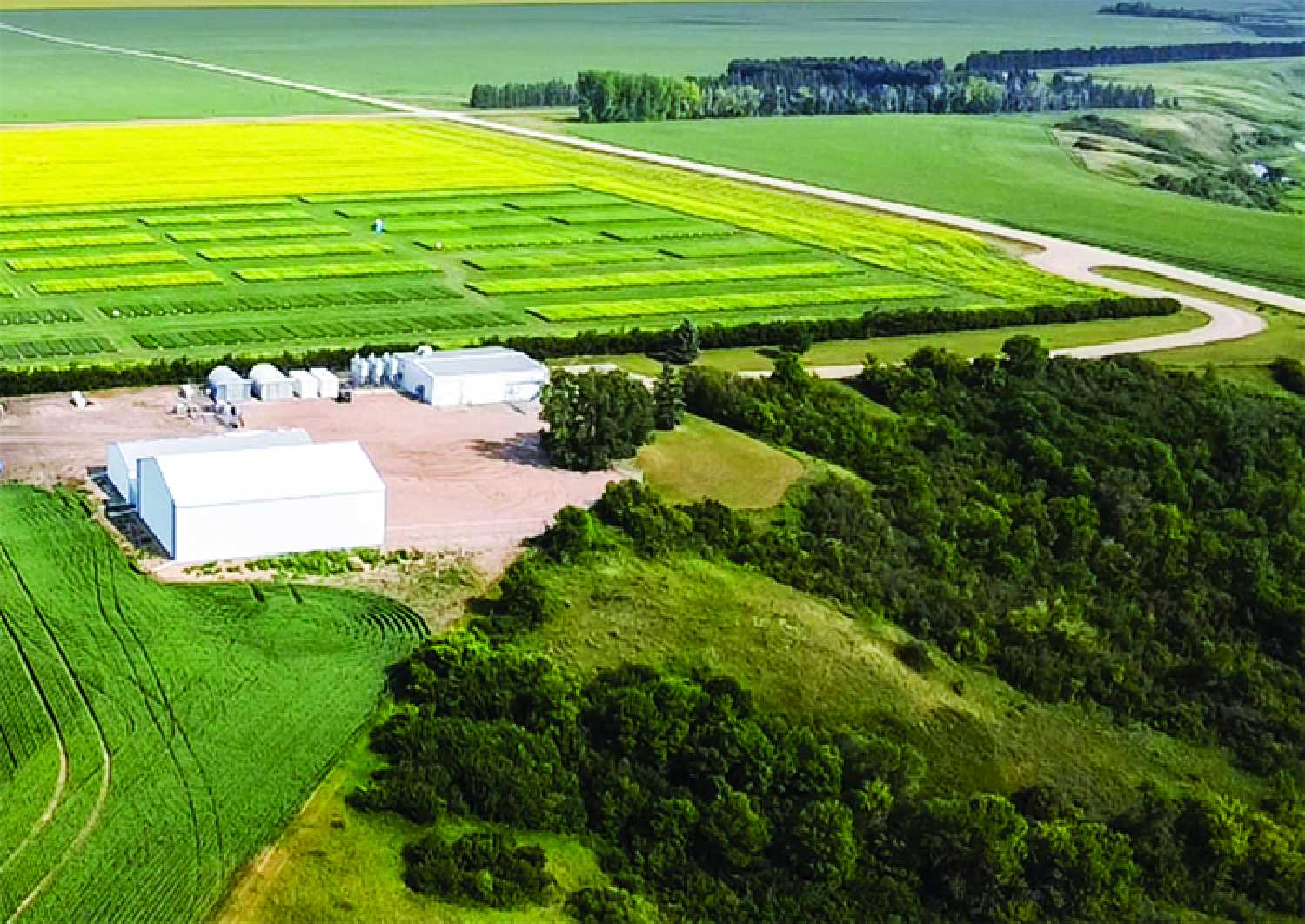

The Agricultural Producers Association of Saskatchewan (APAS) said last week they were was concerned about Agriculture and Agri-Food Canada’s (AAFC) decision to close seven research sites in Canada as part of federal cutbacks, including the Indian Head Research Farm, which has been in operation since 1887, as well as the facility located at Scott, Saskatchewan.
The government is eliminating 665 positions across Canada.
“Closing these sites is the opposite of progress. You cannot claim global leadership in sustainable agriculture while bulldozing the very farms and labs required for discovery and adaptation. It’s like eating the goose that lays the golden eggs—sacrificing a steady, long-term benefit for a single, short-term gain.”
—APAS President Bill Prybylski
“These closures eliminate critical public research infrastructure that has been foundational for Canadian farmers’ competitiveness for decades and contradict AAFC’s stated mission to ‘drive innovation’ and ‘create conditions for long-term profitability,’ said APAS in a statement. “This critical public research infrastructure embodies a public good that delivers widespread benefits to the public.”
“To claim these cuts are aligned with a ‘core mandate’ of innovation misleads the agricultural sector,” said APAS President Bill Prybylski. “Closing these sites is the opposite of progress. You cannot claim global leadership in sustainable agriculture while bulldozing the very farms and labs required for discovery and adaptation. It’s like eating the goose that lays the golden eggs—sacrificing a steady, longterm benefit for a single, short-term gain.”
APAS said the facilities at Indian Head and Scott provide producers with essential agronomic data tailored to local growing conditions. Additionally, the Lacombe Research and Development Centre in Alberta, a leading hub for forage and meat science, and the facility at Portage la Prairie, Manitoba, are also affected.
“The federal government is trading long-term benefits for a short-term rounding error in budget savings,” said Prybylski. “You cannot be a world leader in sustainable agriculture while eliminating the research needed for sustainability and adaptation. This will create an innovation vacuum that the private sector isn’t stepping in to fill. By the time producers feel the full impact of these decisions, it will be too late to reverse the damage.”
APAS says it is troubled by the timing of the cuts.
“The Sustainable Canadian Agricultural Partnership (SCAP) places significant emphasis on adaptation and resiliency as core objectives, yet these closures directly undermine those goals. Farmers are being asked to adopt climate-smart practices that require targeted research support—research that will no longer exist if these facilities are shut down.
“In response, APAS is urging the federal government and the Minister of Agriculture and Agri-Food to release an immediate impact assessment outlining how it plans to achieve its innovation and adaptation goals considering these widespread closures. Producers deserve transparency about how these research reductions will affect them—and answers.”
The World-Spectator reached out to AAFC and recieved the following statement.
“Like other federal departments, Agriculture and Agri-Food Canada (AAFC) has identified savings over three years while remaining focused on its core mandate. At this point, we can confirm that AAFC’s workforce will be reduced by approximately 665 positions and that notices to the 1,043 affected employees were issued on January 22.
“As part of this process, AAFC will close three research and development centres—Guelph, Ontario, Quebec City, and Lacombe, Alberta—and four satellite research farms—Nappan, Nova Scotia, Scott, Saskatchewan, Indian Head, Saskatchewan, and Portage la Prairie, Manitoba.
“AAFC will remain Canada’s largest agricultural research organization, with 17 research centres nationwide and research farmland in every province. There are no imminent site closures, and any wind-down of scientific operations would follow a careful decision process that could take up to 12 months. As such, it is too early to determine and share details on final workforce impacts.”
The Agriculture Union also released a statement last week denouncing the cuts.
“The Agriculture Union unequivocally denounces the recent job cuts at Agriculture and Agri-Food Canada, impacting roughly 1,043 people across the country,” they said in a statement. “Our union represents 2,500 employees at AAFC, all of whom are essential to the health and resilience of our agricultural sector. 494 of our members are affected by this round of cuts. Our AAFC members are the backbone of Canadian agriculture research. They assist farmers by mitigating the impacts of climate change and drought, performing groundbreaking research, and keeping our food production industries competitive on a global scale.”
“These cuts will sabotage important gains we’ve made in agricultural research and set research on Canadian food products back by decades,” says Milton Dyck, National President of the Agriculture Union. “We have been warning the federal government for months about cutting an already-decimated department. There is simply no more room to cut.”
The Agriculture Union says that while overall the federal service has grown by 30 per cent in recent years, the same has not been true for AAFC. They say staffing numbers at AAFC have decreased by 14 per cent between 2012 and 2025.
“The cuts to AAFC include the shutting down of seven research farms and centres: the Nappan Research Farm in Nova Scotia, the Quebec Research and Development Centre in Quebec City, the Guelph Research and Development Centre in Ontario, the Portage la Prairie Research Farm in Manitoba, the Scott Research Farm and Indian Head Research Farm in Saskatchewan, and the Lacombe Research and Development Centre in Alberta. Indian Head and Nappan were two of the five original research farms established by the Canadian government in 1887,” said the Agriculture Union in a statement. “Shutting down these centres represents the loss of over a century of knowledge and expertise. The research centres slated for closure were responsible for breakthrough discoveries in sustainable beef production, crop sustainability, food safety and nutrition, and no-till farming.”
“The way the employer communicated these cuts to our members and to the union was shocking and abrupt. Our members are reeling,” says Dyck. “The union learned about the cuts of research centres at the same time as our members, and we had no advance notice about the details of the cuts. AAFC has an obligation to consult with the union throughout this whole process. These cuts at AAFC damage research into the fast-changing needs of the agriculture sector, whether it be changing environmental conditions, development of new varieties of agriculture products safe from disease, or food safety. While our partner nation to the south is slashing research, we should not be.”