Destinee Peter became a successful entrepreneur and is happy to give back to her community
March 16, 2026, 3:41 pm
Ashley Bochek
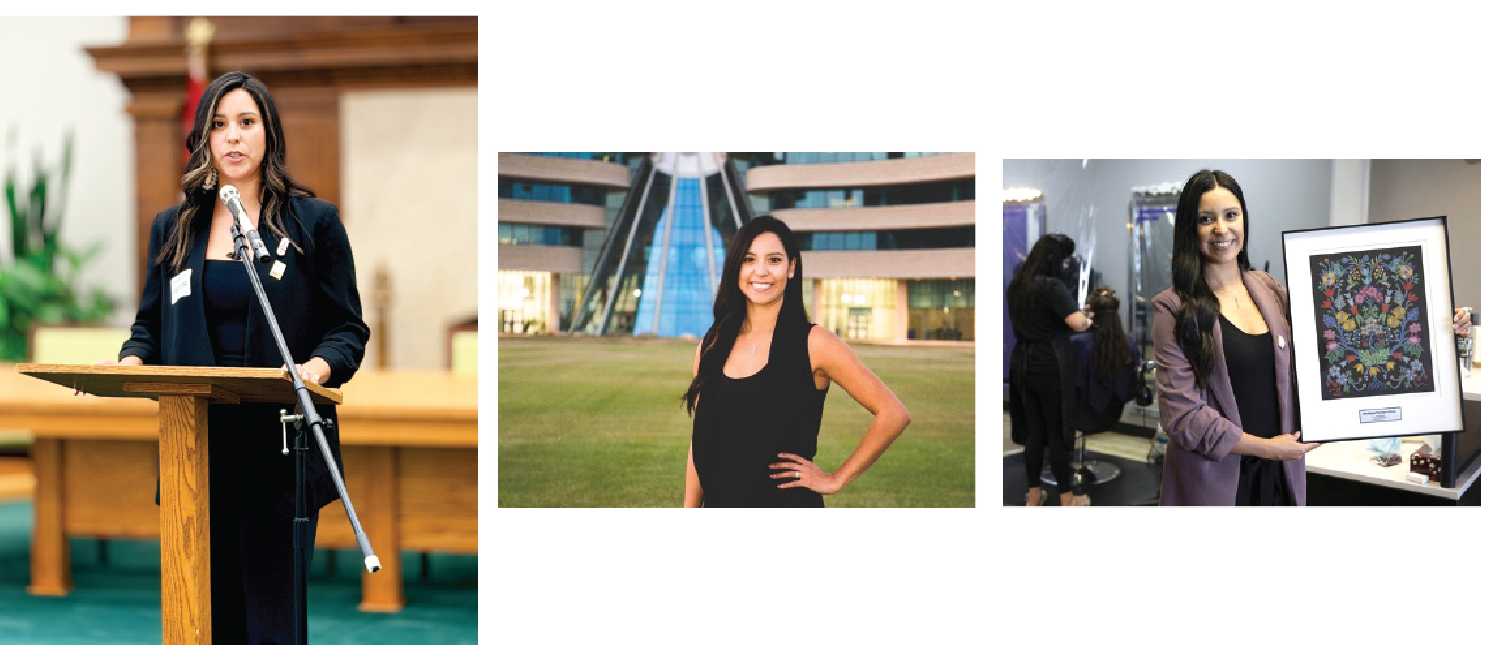

Destinee Peter, owner of Tangles Hair and Beauty Salon in Regina, is a member of Carry the Kettle Nakoda Nation in Saskatchewan. She has built a successful business and is giving back to her community one haircut at a time.
Destinee took ownership of Tangles over a decade ago at the age of 22. Since then, her business has grown, offering a wide variety of services to customers and Destinee also teaches classes to Indigenous youth.
“I am a proud member from Carry the Kettle Nakoda Nation,” she says. “I have a husband and two boys. I am the owner of Tangles Hair and Beauty Salon for the past 12 years since I was 22 years old. Tangles is located in Regina. I also have a talented team of experienced stylists and technicians. Our main goal is to make our clients feel more beautiful in the skin they’re in—in an always warm and welcoming environment.”
Destinee says she has been passionate about hair care since a young age. “I’ve always had a passion for the beauty industry, especially hair,” she says.
“As a child I would braid my mom’s curtains and her blankets at four years old, then I moved onto my sister’s hair and braiding it, and as I got a bit older I started cutting their hair. I was always cutting their bangs way too short, and as I got a little bit older I started experimenting on my sisters’ and friends’ hair with colour and I was always getting into trouble then because the bathroom would be pink or different colours all over the walls and sink.”
She says the opportunity to own a studio came out of nowhere and decided to act on it. She credits Women Entrepreneurs of Saskatchewan for helping her get her start in business.
“I didn’t know I wanted to become an entrepreneur. I’ve always had a really good work ethic and I had worked at Tangles previously for three and a half years, and I was about to leave and work at another salon when the previous owner asked if I wanted to purchase the salon since she said without me, the salon would have to close.
“That was a huge decision because I was 22 at the time and I knew nothing about owning a business.” She said the offer made her stop and think. “When the previous owner first asked me, I was shocked and was like ‘I have no idea where to start.’ My late dad was an entrepreneur and he encouraged me to do it and so did the previous owner.”
“I went to the bank to try to get a start-up loan and I immediately was denied. I didn’t have a co-signer, they said I was too young, and I didn’t have any credit. Thankfully, growing up I worked at a gas station and worked a lot, so I saved all of my money and I now know being older when I hoarded all of my money in savings—I didn’t have a lot of money growing up—I now know is scarcity. So, I used all of my savings in cash to purchase the salon. It wasn’t until three and a half years into owning a salon that I was ready to expand and got my first loan through WESK (Women Entrepreneurs of Saskatchewan) and a grant through SIEF (Saskatchewan Indigenous Enterprise Foundation).”
Support from WESK
Destinee says WESK supported her entrepreneur journey from the beginning.
“WESK was very supportive. They believed in me right from the beginning and it was really great because they work with you. They encouraged me and helped me learn all the ways of running a business. They built my confidence and made me the business owner I am. They have amazing resources and a variety of them with classes to enhance my business, marketing classes, they have mentoring circles with other women entrepreneurs which was amazing and so helpful. My first loan to help me expand my salon was to get my laser machine and I just paid it off last year.”
Destinee spoke at the Saskatchewan Legislature last week, at a WESK event for International Women’s Day.
“I truly wouldn’t be where I am today without the support of Women Entrepreneurs of Saskatchewan,” she said at that event.
“When I first bought my salon at 22, the bank immediately denied me because I didn’t have a co-signer. They told me I was too young and didn’t have enough credit history, so I used my savings to make it happen.
“Three years into owning the salon, I wanted to expand and bring in laser hair removal services. Once again, the bank denied me. That’s when I started doing some research and discovered WESK.WESK gave me my very first business loan.
“WESK took a chance on me and believed in my business, and I will always be grateful for that.”
Lessons learned as an entrepreneur
Destinee lists some of the life lessons she has learned as a young entrepreneur and owner of Tangles Hair and Beauty Salon.
“Customer service is key. Also having a business plan in place to see if you are reaching your goals is really important. Moreso in the beginning, you can’t do everything. Sometimes you have to say no and it was hard when I was younger to know that I was going to miss things like friends’ birthdays, parties, gatherings, and I realized then it was about following my dream and this is what it was going to take.
“Also staying on track with your taxes and payroll in the beginning is an important lesson to learn, especially for new entrepreneurs, and just continuing your education, whether that is my hair classes or classes through WESK or SIEF, because things are always changing and evolving, so that is one way to continue to learn. Another thing I have learned is to stay faithful to your salon distributors. It means a lot to them, and they will go above and beyond for you. If I need stylists, they will send them my way if I am looking to hire, or if I can’t make it to pick up, they will drop off the product for me.”
Proud accomplishments
Besides owning Tangles in Regina, Destinee is actively part of organizations that encourage Indigenous youth entrepreneurship.
“I sit on the National Aboriginal Capital Corporation Associations (NACCA) board,” said Destinee. “It is an Indigenous Youth Business Advisory Council and I think having that platform, and being a voice for Indigenous women and youth to help the next generation of Indigenous youth entrepreneurs, is important. I share my struggles and help them understand what they can do better to help the future Indigenous entrepreneurs. Even being a member of WESK and having the support from SIEF I think is really amazing too, because they just want to showcase me and my work to Indigenous women and youth, to show that it is possible to follow your dreams and have them see someone who looks like me and know it is hard, but it is possible. I think that is really encouraging, especially to the youth, to see.
“I am about to start my sixth year sitting on NACCA’s youth board. I won the WESK 2024 Indigenous Entrepreneur award. I’ve won a National Indigenous Hairstylist of the Year award and I was able to go to Paris to do hair. I won NACCA’s 2021 Indigenous Entrepreneur award as well, which really meant a lot. I got a lot of traction with that, and it really helped my business—I also got a grant with that. All of the awards I’ve won so far have definitely lifted me up and shown me that I am worthy, and I deserve everything I have achieved, and it has definitely helped me be where I am now.”
Giving back to community
Destinee says she offers hair services and classes in her community, Carry the Kettle Nakoda Nation.
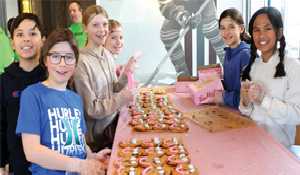
“I go there quite often for wellness day and give haircuts, just giving back to my community because without them, without their support, I would not be where I am today. I am just really thankful to have them. Now it is my turn to give back to them by giving haircuts. I have also taught the cosmetology class out there a few times now as well. When I first took over Tangles, my grandpa told me, ‘Never forget where you came from and who helped you along the way’ and that really stood out for me. My staff and I go out there quite often because they love when we are there, and it is such a great feeling going there. My community has gotten to know all of my staff now, so they are very welcoming—my staff has gone out to my community now without me if I am away—they’re just very welcoming to my staff and my staff enjoy it as well. It is a really good time.”
Purpose in world
Destinee believes it is her purpose to continue sharing her story and being active in her community to serve as a role model in entrepreneurship for Indigenous youth.
“I think it is important because they need someone that looks like them to show them they can follow their dreams, and to dream big. I also think it is important to share my story so they can relate to it, and know how it is possible to overcome stereotypes and racism and any barriers that come into place. I did come from a family where some family members struggle with addiction, so I do a lot of work out in the community because that is something that is close to my heart and my community sees that. Because of the struggles I have within my family, it is important to me to go out in the community and show awareness of it. When you know your purpose, I think it goes a long way and that is my purpose.”
A recent loss was another opportunity for Destinee to stop and take stock.
“I recently lost my dad and that moment I didn’t think I could go on. It made me sit down and really think of the pros and cons of my business, if I wanted to change careers or not, and when I finished listing all of my pros and cons, I realized this is what I love to do and don’t ever want to give it up, and that totally sparked a little fire inside of me that reminded me of my purpose, that I am doing this for the next generation and the kids that are watching me and are cheering me on.”
Journey Braids
Destinee has future goals of offering journey braids of passed loved ones to Indigenous communities across Saskatchewan.
“Losing my dad, I learned to turn a negative situation into a positive one, so it really changed me and inspired me in my work—now all I want to do is work on loved ones who have passed away. I have done a few people now when they pass away, I do their hair and give them their journey braid. I want to get more into that and offer more journey braids to loved ones who have passed away, or go out to different Indigenous communities and offer journey braids. Then, also offering educational classes on how sacred our hair is and why we cut our hair when a loved one passes, or keeping your hair after a haircut, and you burn it or choose to do whatever you want with it.
“I got a phone call from a funeral home who said no one there knew how to do a French braid so they asked if I could, so I said absolutely, and it was the greatest experience ever. It was so fulfilling. I was able to do my dad’s journey braid, my grandpa’s, I just get so excited. I love it.”